
Got bed bugs? Who ya gonna call?
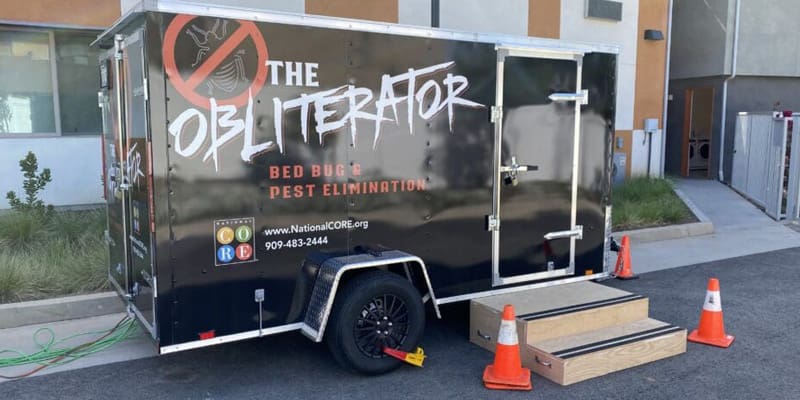
National CORE’s Capital Improvements Department, known as CapEx, tackles challenges with an entrepreneurial mindset, finding ways to provide outstanding service to internal clients and create revenue streams by marketing a growing list of services to third parties. Atop the list is the team’s bed-bug enterprise, the Obliterator, which wipes out the persistent pests at a cost savings to National CORE and other clients.
Welcome to the future of bed-bug control.
Bed bugs are one of the nastiest, most persistent of pests – a frequent and recurring challenge for hotels, motels, homeless shelters, transitional housing and apartment complexes.
National CORE has had its own share of struggles with this common foe.
Traditional treatments provided by pest control companies can run into the hundreds of thousands of dollars and our Cap-Ex team discovered that even after the apartments were cleaned, the bugs re-emerged from numerous hiding spots creating a never-ending cycle.
“We had historically thrown money at problems that never went away. Bed bugs are amazingly hard to get rid of and traditional treatments weren’t working. So, born out of necessity, we created the Obliterator,” said Robert Noeth, vice president of maintenance and capital improvements.
Make that two Obliterators – CapEx now runs a pair of converted trailers equipped with heaters capable of heating the interior to a toasty 140 degrees Fahrenheit – hot enough to kill bed bugs in two hours. CapEx uses the rigs to quickly heat treat residents’ personal belongings and clothes while their apartments are being treated and to treat gear brought in by new residents during move-in.
The apartment-focused element of the program is like the system used by traditional pest companies. But where those agencies typically heat treat infestations at 120 to 130 degrees, which can take three to four hours to eradicate the pests, CapEx jumps right to 140 degrees.
The usual concern with such high temperatures is damage to fragile, plastic based décor, such as mini-blinds, or damage to sprinkler systems. CapEx handles those by removing the potentially damageable décor and shielding sprinklers with a combination of dry ice and insulated cups.
The higher temperatures make it harder for pests to shield themselves from the killing heat.
The team follows up with lures that mimic human pheromones – greatly increasing the likelihood of full eradication.
“This holistic plan we created is far more comprehensive than the traditional approach taken by pest companies and far less expensive,” Noeth said.
After perfecting the system, CapEx is now marketing it as a service to other organizations, including hotels and motels.